Bookalism
Project Framing
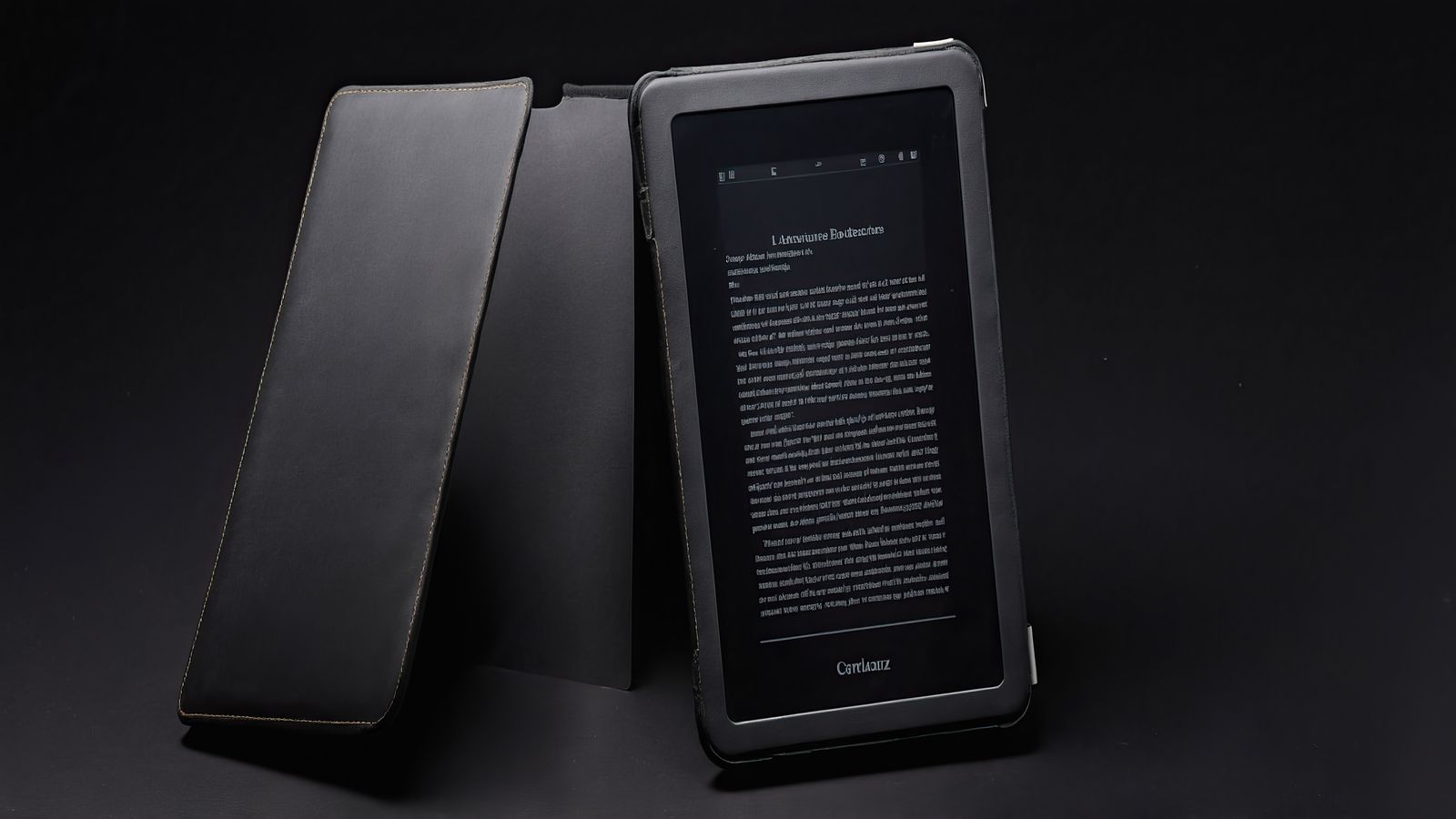
Bookalism came to us as a platform with a clear problem: it had content worth reading but an interface that competed with the words on screen. The brief was straightforward in principle—make the reading experience the product—but layered in execution. Every decision from typeface selection to spacing ratios needed to serve a single priority: let the literature breathe.
This was not a case of applying a coat of polish to an existing design system. The project called for a ground-up rethink of how a literary platform could present curated content without leaning on the visual shortcuts that most content platforms default to. No hero carousels. No aggressive card layouts. No algorithmic recommendation widgets fighting for attention in the sidebar.

Challenge and Design Context
Literary platforms tend to fall into two camps. Either they mimic the information density of a news aggregator, or they go so minimal that navigation becomes guesswork. Bookalism needed a third path—one that felt curated and intentional without sacrificing discoverability.
The content model included long-form reviews, short-form recommendations, curated reading lists, and author profiles. Each format had different density requirements, different reading rhythms, and different user expectations. A review that runs to two thousand words needs generous margins and a type size that sustains long reading sessions. A quick recommendation card needs to land in a glance. Getting these to coexist in one system without visual whiplash was the central design challenge.
We also had to contend with an audience that skews towards people who have strong opinions about how text should look on screen. These are readers who notice kerning. The margin of error for typographic decisions was narrower than most projects would allow.
Structure and Layout Decisions
The layout system we settled on uses a narrow content well for long-form reading, flanked by generous whitespace that expands on larger screens. On smaller viewports, the content well fills more of the available width, but the vertical rhythm tightens to compensate. The effect is a reading experience that feels spacious regardless of screen size.
Navigation sits in a thin persistent bar that collapses to near-invisibility during scroll, then reappears on upward movement. This is a well-worn pattern, but the implementation details matter. The transition timing uses a cubic-bezier curve that feels organic rather than mechanical. The bar itself is translucent with a subtle backdrop blur—enough to separate it from content without creating a hard visual edge.
Content hierarchy relies almost entirely on typography and spacing rather than colour or container differentiation. Sections are separated by generous vertical space and thin horizontal rules rather than background colour shifts or card containers. The result is a page that reads like a well-set book spread rather than a web application.

Typography and Visual Language
The type system was the single most time-intensive element of this project. We tested over a dozen serif and sans-serif pairings before arriving at a combination that balanced warmth with precision.
The body typeface needed to perform at sustained reading lengths without fatigue. That ruled out anything too geometric or too condensed. We needed generous x-heights, open counters, and letterforms that hold up at both 16px for desktop reading and 17px for mobile. The final choice was a transitional serif with enough personality to feel intentional but enough restraint to disappear into the reading experience after the first paragraph.
Headings use a contrasting grotesk that introduces sharpness and modernity. The weight contrast between heading and body text creates clear entry points on the page without needing decorative elements or colour changes.
Monospaced type appears in metadata positions—dates, reading time estimates, category labels, and system-level interface text. This three-tier type system creates a clear information hierarchy: editorial content in serif, structural content in sans, and system content in mono.
Interaction and Implementation Notes
The front-end build prioritised progressive enhancement and fast initial paint. Content pages ship as static HTML with minimal JavaScript. Interactive features—search, filtering, reading progress indicators—hydrate after the initial render without blocking the content the user came for.
Image handling follows a strict loading strategy. Hero images for articles load eagerly with appropriate width and height attributes to prevent layout shift. Supporting images within articles use native lazy loading. We avoided art direction complexity by settling on a single aspect ratio for all editorial images, which simplified both the design system and the content workflow.
The search experience uses a locally built index rather than a third-party service. The index builds at deploy time from the content corpus, and the client-side search interface opens as a keyboard-accessible overlay. Results prioritise title matches over body content matches, with highlighted excerpts showing context around the matched terms.
Lessons and Observations
The biggest lesson from Bookalism was how much design discipline a typographic-first project demands. When you strip away colour, illustration, and decorative elements, every spacing decision becomes visible. There is nowhere to hide a misaligned baseline or an inconsistent margin. The grid either works or it does not, and the eye catches discrepancies that would be invisible on a more visually complex site.
The other takeaway was about content structure as a design constraint. When the design system depends on consistent content formatting, the content model needs to be robust enough to enforce that consistency. We built content validation into the publishing workflow so that articles missing required metadata or violating formatting conventions would be flagged before they reached production.
Bookalism reinforced something we return to on most projects: restraint is harder than complexity, and the projects that look simplest often require the most careful decision-making underneath.
Related Work
Interested in working together?
We are always open to conversations about new projects.
Start a project