PMJ
Project Framing
PMJ is a professional services consultancy with a strong offline reputation built through decades of client relationships and referral networks. Their digital presence had not kept pace. The existing website was functional but generic—a stock template with swapped colours that could have belonged to any firm in any industry. For a consultancy that trades on credibility and judgment, having a website that communicates neither was a material problem.
The brief was to create a digital presence that felt commensurate with the quality of the firm's actual work. Not flashy, not trendy, but considered, authoritative, and unmistakably intentional. The kind of website where the design itself signals the quality of thinking the client can expect.

Challenge and Design Context
Professional services websites have a specific credibility problem. The sector is littered with sites that use the same visual shorthand: stock photography of handshakes in glass boardrooms, geometric pattern backgrounds, and vague copy about delivering excellence. These sites fail because they communicate nothing specific. They could belong to any consultancy, which means they represent none of them effectively.
PMJ needed to break from that convention without veering into territory that would feel inappropriate for their sector. A law firm cannot look like a streetwear brand. A consultancy cannot look like a tech startup. There is a visual register that communicates professional authority, and the challenge was to operate within that register while still being distinctive.
The other significant challenge was content. PMJ had deep expertise but had never articulated it in writing. The firm ran on relationships and word-of-mouth. Translating that into website content meant working closely with the team to surface the thinking and methodology that their clients valued but that had never been documented.
Structure and Layout Decisions
The site structure is deliberately concise. Professional services sites often sprawl into dozens of pages—separate pages for each service line, each industry vertical, each team member. That sprawl dilutes impact and creates maintenance burden. We consolidated PMJ's site into a tight structure: home, about, services, perspectives (a lightweight thought leadership section), and contact.
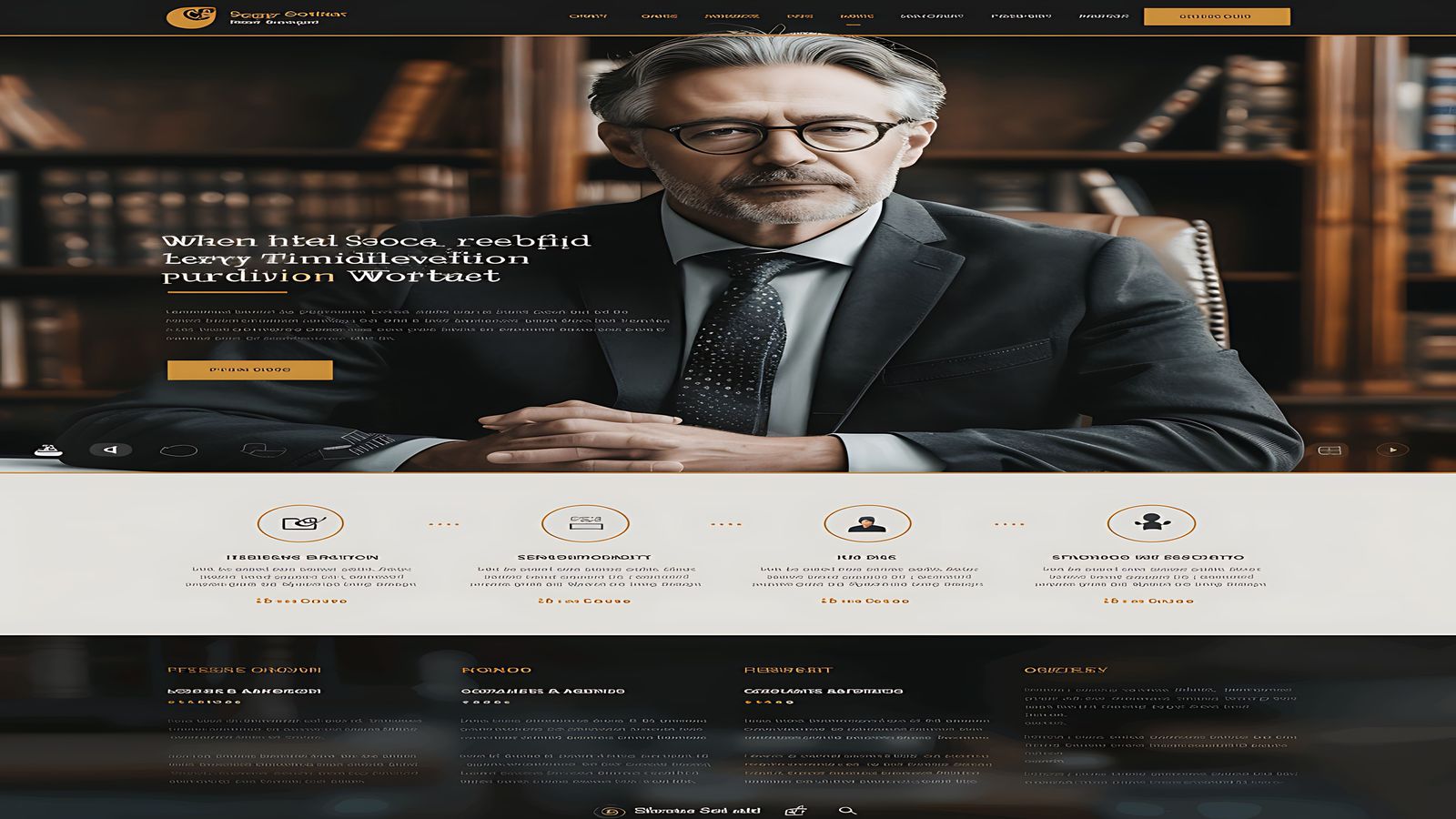
The homepage uses a two-part structure. The top section is a clean positioning statement with confident, oversized typography on a generous field of whitespace. No hero image, no background video, no slider. Just a clear declaration of what the firm does and who it serves. Below, a compact section presents the three core service areas with one-line descriptions and links to the full services page.
The about page carries the most content weight. It opens with a brief history of the firm's approach (not a founding story—PMJ preferred to focus on methodology rather than chronology), followed by the working principles that guide engagements, and a team section that presents senior practitioners with short bios focused on expertise rather than credentials.
The services page uses an accordion pattern that lets visitors expand the service areas most relevant to them. Each expanded section includes a concise description of the service, the typical engagement model, and the kinds of outcomes the work produces. No case studies with fabricated metrics—just clear, honest descriptions of what the work involves.

Typography and Visual Language
Typography carries almost the entire visual identity for PMJ. We selected a sharp neo-grotesk for headings that communicates precision and contemporary thinking. Body text uses a slightly warmer humanist sans that is legible at length and carries enough character to feel chosen rather than defaulted to.
The colour palette is monochromatic with a single deep accent. The base is warm white and near-black—the same palette that a well-designed business card would use. The accent colour appears only in interactive states and occasional typographic highlights, never as a background wash or decorative element. This restraint is deliberate: in professional services, colour restraint communicates seriousness and focus.
Photography is minimal and strictly supplementary. Where images appear, they are architectural or environmental—spaces and structures rather than posed portraits or lifestyle shots. This avoids the stock photography trap entirely and gives the visual language a timeless quality that will not need updating when trends shift.
Whitespace is used aggressively. Page sections are separated by generous vertical space that gives each content block room to land. The effect is a site that feels unhurried and confident—a pace that aligns with how PMJ approaches client engagements.
Interaction and Implementation Notes
The front-end build prioritised speed and simplicity. The site is entirely static, with no client-side JavaScript required for the core content experience. The only interactive elements—the service accordions and the mobile navigation—use minimal JavaScript with progressive enhancement, so the content is fully accessible even in degraded environments.
Page weights are exceptionally low. Without photography-heavy layouts or complex interactive features, the total transfer size for a typical page sits well under 200 kilobytes. This translates to near-instant load times on any connection, which is a practical advantage when the site needs to perform well on conference centre Wi-Fi and mobile connections in transit.
The contact page includes a structured enquiry form with fields for organisation name, engagement type, timeline, and a message field. Form submissions route to a simple server function that forwards enquiries to the appropriate team member based on the selected engagement type. No complex CRM integration—just reliable delivery of the enquiry to the right person.
Lessons and Observations
PMJ reinforced that for professional services, the website is a trust artefact. Visitors are not browsing casually—they are evaluating whether the firm deserves a conversation. Every design decision either builds or undermines that evaluation. Stock photography undermines it. Vague copy undermines it. A considered, restrained design with clear, specific content builds it.
The most valuable design decision was also the simplest: saying less. By consolidating the site structure and cutting content that did not serve a clear purpose, we created a presence that feels authoritative precisely because it does not try to say everything. In professional services, the confidence to leave things out is itself a signal of expertise.
PMJ also showed us how powerful typographic-first design can be in sectors that traditionally rely on imagery. When the type is right, the spacing is right, and the copy is specific, you do not need a hero image to make an impression. The absence of visual decoration becomes a statement of its own.
Related Work
Interested in working together?
We are always open to conversations about new projects.
Start a project